
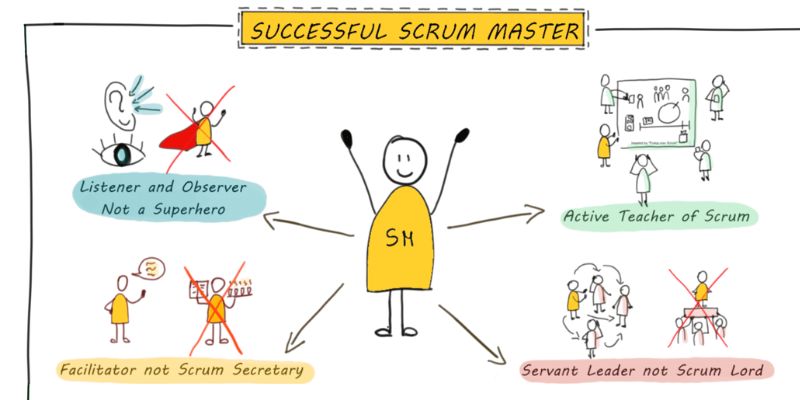
I had a vague idea of what a Scrum Master actually did when I first started using Agile. Like many newcomers, I thought the job primarily involved updating boards and conducting meetings. I soon discovered that being a Scrum Master is far more fulfilling and complex. Trial and error, challenging team dynamics, and ongoing learning influenced my path to Scrum.
Over time, I learned that being a successful Scrum Master requires leadership, empathy, and constant improvement rather than power or control. FITA Academy equips learners with professional Scrum Master training, focusing on Agile principles, Scrum frameworks, sprint planning, team facilitation, and real-world project execution. Discuss my experience, the things I’ve learned, and useful advice in my blog to help aspiring Scrum Masters gain self-assurance and thrive in actual Agile settings.
Understanding the Real Role of a Scrum Master
I had trouble properly identifying my role early in my career. Was I in charge of a project? A leader of the team? A moderator? I discovered that the solution was a combination of all of those things. The team benefits from a Scrum Master who makes sure Scrum is comprehended and used successfully. My actual duties included coaching the team, removing obstacles, and shielding them from outside distractions. As concentrated on encouraging transparency and facilitating collaboration rather than giving out tasks.
Discovered how to lead conversations without controlling them and promote team ownership. Everything changed when I adopted the servant leadership approach. Meetings took on greater significance, the team became more involved, and advancement felt natural rather than imposed.
Building the Right Skills and Agile Mindset
Being a Scrum Master required more than just technical expertise. I soon saw that soft skills were far more important. My everyday toolkit expanded to include conflict resolution, emotional intelligence, and active listening. So took the time to learn about Agile principles, not just Scrum activities. My foundation was strengthened by certifications like CSM, but it was through putting those ideas to use in actual projects that I truly developed.
Gained the ability to remain composed under pressure, particularly when faced with looming deadlines and sprint failures. I eventually adopted the perspective that failures were teaching moments. Scrum Master Certification in Chennai enables learners to master Agile principles, Scrum frameworks, sprint management, team collaboration, and real-world project execution. This change enabled me to lead teams patiently and confidently, even when results fell short of expectations.
Overcoming Early Challenges in Scrum Adoption
Opposition to change was one of the largest obstacles I encountered. Scrum rituals and time-boxing were viewed with suspicion by teams that had previously operated under more conventional frameworks. By initially attempting to rigidly enforce the framework, which only made things more difficult. In the hard way that teams that get the “why” behind the approach are better able to implement Agile. Started out by outlining how Scrum enhances predictability, responsibility, and visibility. Gaining attention to issues and changing procedures without sacrificing fundamental values. Teams gradually became more willing to try new things, and Scrum began to feel more like a support system rather than a burden.
Gaining Hands-On Experience with Scrum Events
Theory and practice really came together when I facilitated Scrum events. Know how to strike a balance between ambition and practicality through sprint planning. The value of clear, targeted communication from daily stand-ups. Retrospectives evolved into a secure environment for ongoing improvement, while sprint reviews assisted in bridging the divide between stakeholders and development teams.
At first, retrospectives were awkward and monotonous. As time went on, I promoted open dialogue and added additional formats. Teams discovered blockages and celebrated victories during these meetings, which turned into life-changing events. The Scrum Master Training Institute in Chennai focuses on practical Agile and Scrum skills, including sprint planning, team facilitation, backlog management, stakeholder collaboration, and real-world project implementation. Found out that the team’s well-being and the Scrum Master’s efficacy are directly correlated with the caliber of Scrum events.
Working with Cross-Functional Teams and Stakeholders
I worked with teams of people with varying backgrounds, personalities, and skill sets as my experience developed. Both creativity and conflict were brought about by this diversity. I discovered that concentrating on common objectives rather than personal viewpoints helped me resolve conflicts. Another learning curve was stakeholder management. Transparency and discussion were necessary to strike a balance between team capacity and corporate expectations. By converting technical limitations into commercial jargon and vice versa, I served as a liaison. I contributed to the development of mutual trust by establishing reasonable expectations and encouraging candid communication. In order to continuously produce value without exhausting the team, this balance was essential.
Tools and Techniques That Supported My Growth
Having the appropriate tools helped me a lot along the way. While communication technologies enhanced remote teamwork, digital boards such as Jira and Trello helped preserve visibility. But I discovered that using tools well is more important than using them to address difficulties. Instead than overloading boards with analytics, I concentrated on keeping them clear and concise. Teams were able to plan more efficiently by using strategies like velocity tracking, backlog refining, and narrative mapping. We should also know the components of the scrum. In order to modify Scrum procedures in accordance with corporate requirements, I also investigated complementary frameworks like SAFe and Kanban. This adaptability improved my approach to problem-solving and broadened my Agile toolkit.
Lessons Learned from Failures and Feedback
I learned some of the most important lessons from my errors. My miscalculations, technological difficulties, and miscalculated team morale led to meetings that ended in failure. I discovered how to actively seek out feedback rather than avoiding it. Intiated my strategy by having open discussions with my teammates. Found that acknowledging doubt enhances credibility instead of diminishing it. I started doing self-reflection on a regular basis. Attempted i made failures into learning opportunities by recording lessons learned at the end of each sprint or project. Able to lead more truthfully and progress more quickly thanks to this habit.
Practical Tips for Aspiring Scrum Masters
My main piece of advice for those just starting out as Scrum Masters is to remain patient and inquisitive. Take your time and observe before attempting to “fix” things. Spend more time listening than talking to gain people’s trust. Keep in mind that Scrum is a framework, not a set of rules, and concentrate on results rather than procedures. Spend time studying real-world case studies and gaining knowledge from seasoned professionals. Above all, embrace lifelong learning. As the Agile environment changes continuously, so do effective Scrum Masters. The success of your team is strongly impacted by your own development.
Final Thoughts on Succeeding as a Scrum Master
In retrospect, I can say that my experience as a Scrum Master has been one of ongoing education and development. Understanding people, encouraging cooperation, and adjusting to change were more important for success than simply grasping Scrum mechanisms. Showing up each day with empathy, clarity, and purpose is what it takes to be a Scrum Master. It’s about providing genuine value while assisting teams in becoming their greatest selves. Being a successful Scrum Master is not only possible, but also inevitable if you are prepared to learn, think, and serve.