
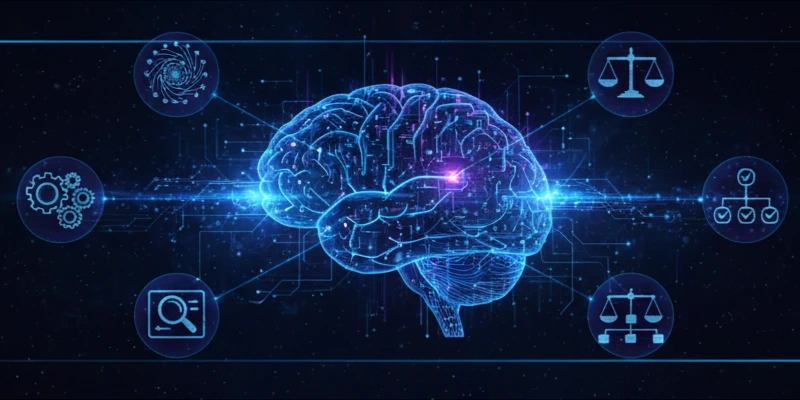
Artificial intelligence has become a major part of modern technology, yet many people still wonder what truly makes a system intelligent. To understand this idea, it helps to look at the core principles that guide intelligent behavior. These principles include learning from data, reasoning through information, adapting to new situations, and making decisions that move toward a goal. When these elements come together, a system can perform tasks that appear thoughtful and purposeful. To explore this concept in depth, you can enroll in an Artificial Intelligence Course in Trivandrum at FITA Academy.
Learning From Experience
One of the most important features of an intelligent system is its ability to learn. This process involves studying data, recognizing patterns, and improving performance over time. Instead of following a fixed set of instructions, an intelligent system increases its capability as it gathers more examples. This type of learning allows the system to solve problems that are too complex for traditional programming. When a system learns from experience, it becomes more accurate, more flexible, and more helpful in real world tasks.
Understanding Information
Intelligence also involves interpreting information in a meaningful way. A system must be able to analyze input, identify what is important, and connect different pieces of data. This skill allows the system to understand context and respond appropriately. For example, if a system receives text, it should recognize tone and topic. If it receives images, it should recognize objects and relationships between them.
The ability to understand information is a key part of what makes a system intelligent because it supports clear and relevant actions. To enhance your comprehension of these ideas, consider registering for an Artificial Intelligence Course in Kochi, which provides hands-on learning and expert support.
Reasoning and Problem Solving
An intelligent system must also be able to reason. Reasoning involves drawing conclusions from the information that is present. It involves evaluating options, identifying solutions, and predicting outcomes. When a system can reason, it can solve new problems instead of relying only on problems it has seen before.
This capacity allows the system to behave in a way that feels thoughtful and structured. Good reasoning skills enable the system to make choices that move it closer to its goals.
Adapting to New Situations
Adaptation is another essential part of intelligence. A system shows intelligence when it can adjust to new environments, new inputs, or unexpected challenges. This includes modifying its behavior, updating its internal models, and learning from mistakes. A system that can adapt becomes more reliable in real world conditions because it continues to perform even when situations change.
Adaptation allows the system to stay useful across a wide range of tasks. To learn these concepts in depth, take an AI Courses in Lucknow, which provides practical training and expert guidance.
Taking Goal Directed Action
Finally, an intelligent system must be able to take action that aligns with a goal. The system observes its environment, makes decisions, and selects actions that support the desired outcome. This process can include predicting results, balancing risks, and choosing the most effective steps. Goal directed behavior gives intelligence purpose because it turns information and reasoning into meaningful results.
When we put all these features together, we get a clear picture of what makes a system intelligent. It learns from data, understands information, reasons through challenges, adapts to change, and acts with purpose. These abilities allow artificial intelligence to assist with decision making, automate complex tasks, and support human creativity.
By understanding these fundamental concepts, we gain a deeper appreciation for how intelligent systems work and why they continue to shape our future. To explore these ideas further, join AI Courses in Jaipur, which offer hands-on learning and expert guidance.
Also check: What is Backpropagation? The Algorithm Behind Neural Networks